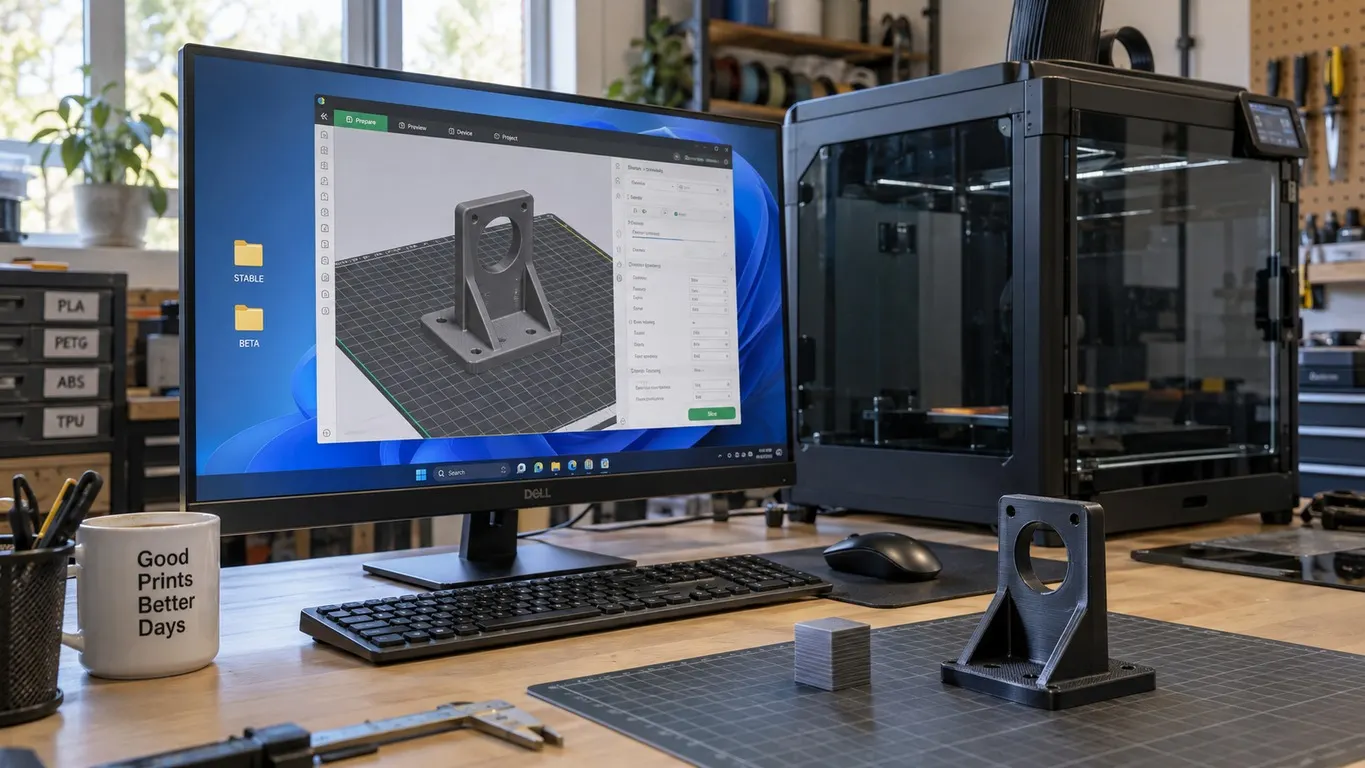
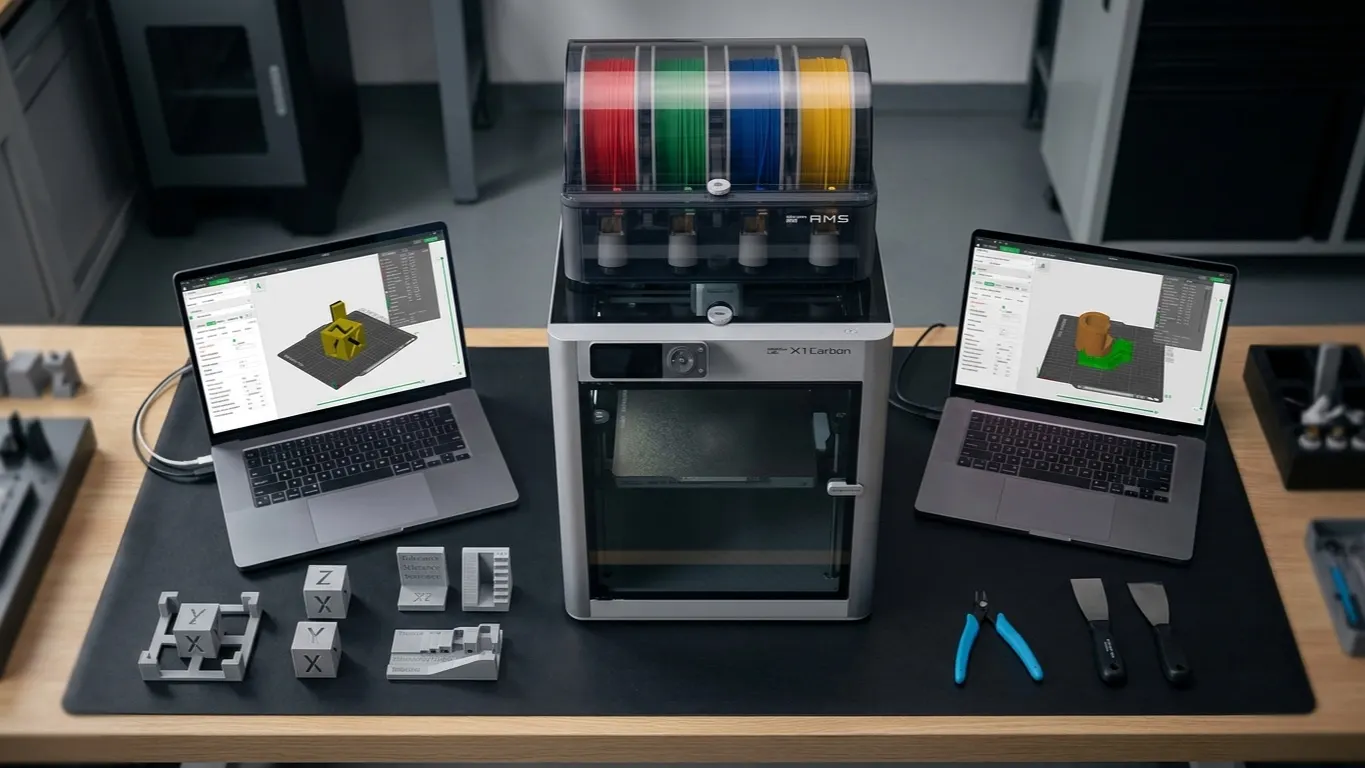
Bambu printers run three separate routines before every print, and together they take 3-5 minutes. On a short part the preparation can outlast the print itself. All three can be turned off, but turning all three off is a bad idea.
The one people turn off most often is flow calibration, and it is a checkbox on the send-print dialog.
The three routines
| Routine | What it does | Time | Skippable |
|---|---|---|---|
| Bed leveling | Maps bed height | ~1-2 min | Conditionally |
| Vibration compensation | Measures resonance, reduces ringing | ~1 min | Conditionally |
| Flow calibration | Measures the filament's flow ratio | ~1-2 min | Usually yes |
Turning off flow calibration
This is the easiest one to skip and the most harmless. The dialog that opens when you send a print has a Flow Calibration checkbox. Clear it and the print skips that step.
The reasoning is simple. If you keep running the same spool, the flow ratio does not change, and the printer spends ninety seconds arriving at the same answer every time.
When not to skip it: a new spool, a different brand, or even a different color of the same brand. Pigment changes flow, and by more than people expect.
A practical routine: leave it on once for a new spool, note the value it finds, then skip it on the prints after that. If you want to measure flow yourself, Orca Slicer has a ready-made test for it.
Bed leveling
Skipping this one is riskier. The printer measures how high each area of the bed sits and adjusts the first layer to match.
You can skip it when the printer has not moved, the plate has not been swapped, and recent first layers have come out clean. The printer then reuses the previous map.
Do not skip it if the printer has been moved, the plate has been taken off and put back, a different plate is in use, or recent prints have had first-layer problems.
First-layer problems are expensive. The two minutes you save by skipping leveling are not worth one failed print.
Vibration compensation
The printer measures the vibration it produces while accelerating and smooths its moves to compensate. Skip it and ringing can show up at corners.
If the printer has not moved and still sits on the same bench, this measurement does not change, so you can skip it. If you have moved it, or changed what it stands on, let it measure again.
Turning it off permanently
If you would rather not clear a checkbox every time, you can make it permanent in the slicer profile. In Bambu Studio the calibration commands sit under printer settings, in Machine G-code → Machine start G-code. Edit the relevant lines and the printer skips them.
This one needs care. Break the start G-code and the printer can begin extruding before it is hot. Copy the existing code somewhere safe before you change it.
Summary
The dull but correct answer: skip flow calibration and leave the other two alone. Most of the time you would save is there anyway, and it carries the least risk.
Turning all three off to save two minutes does not pay if it costs you one failed print a month.