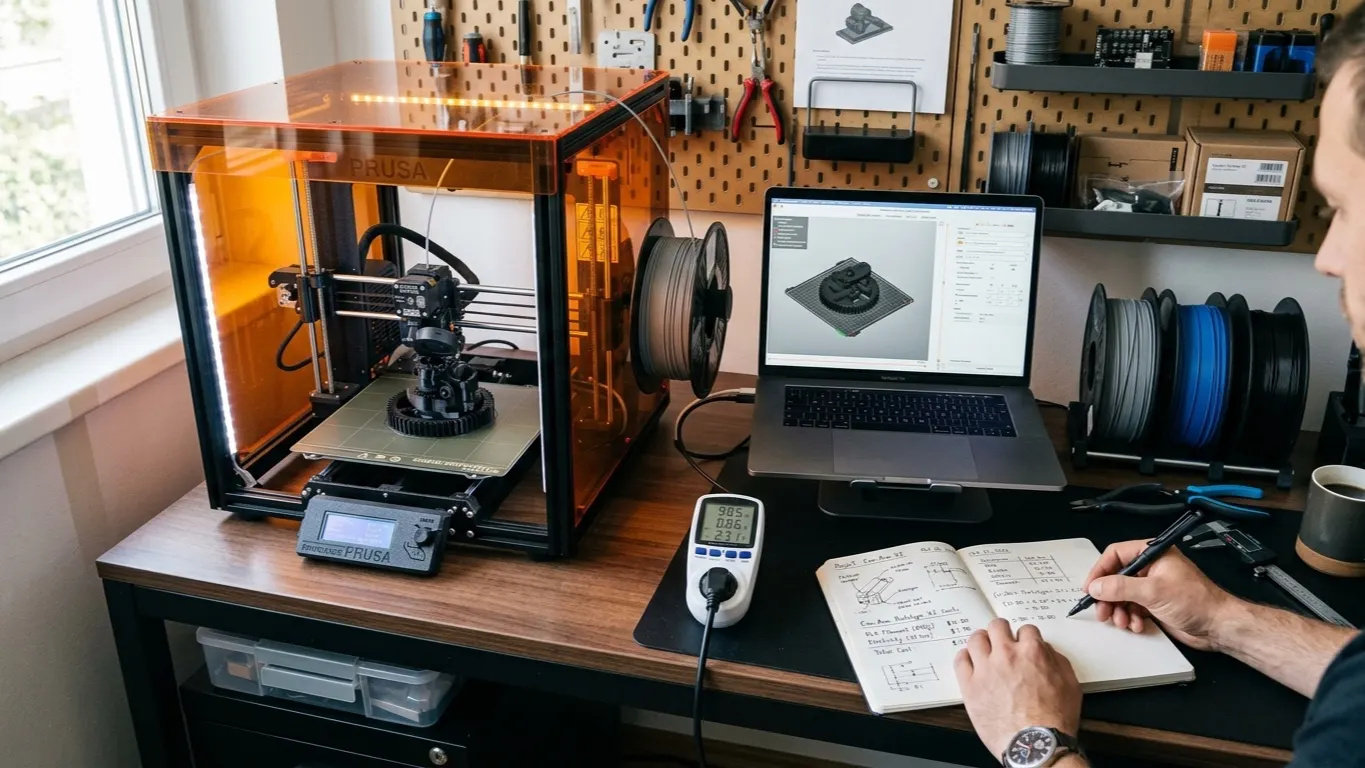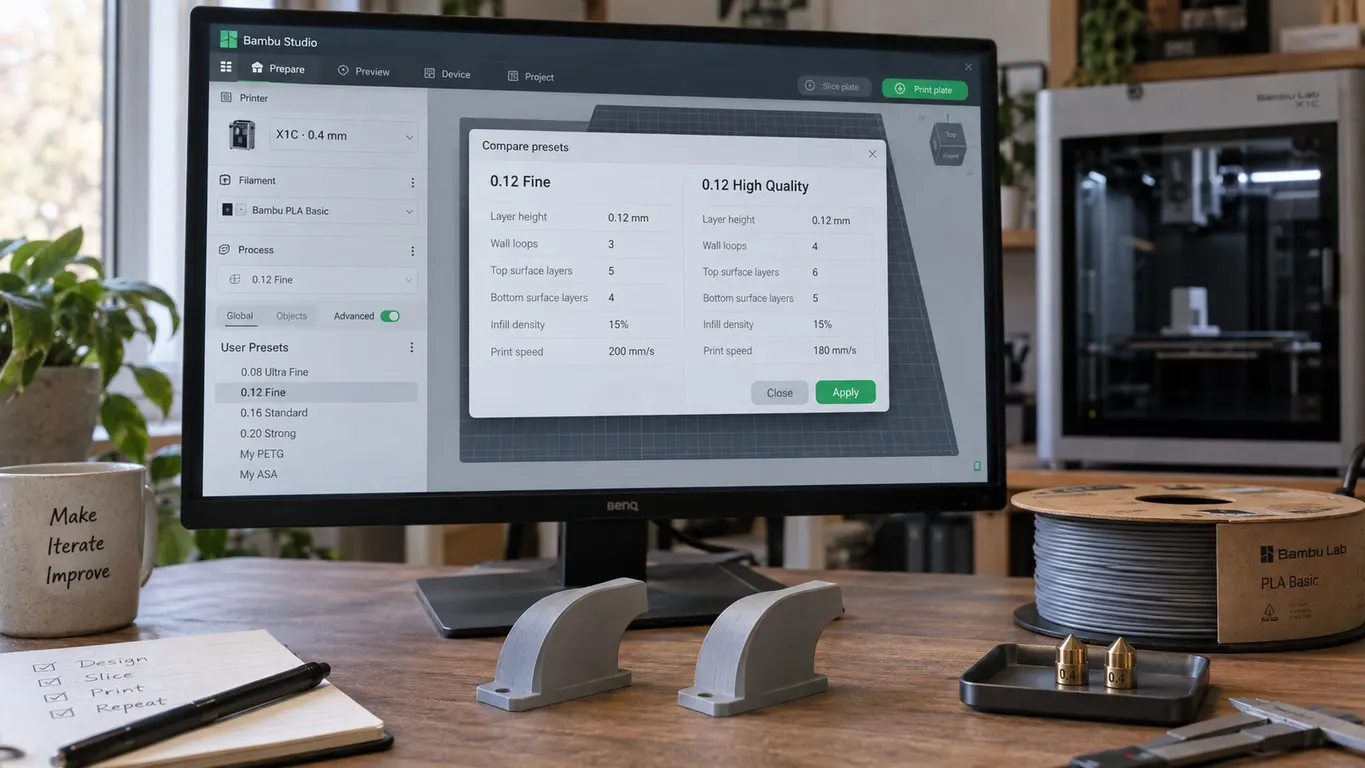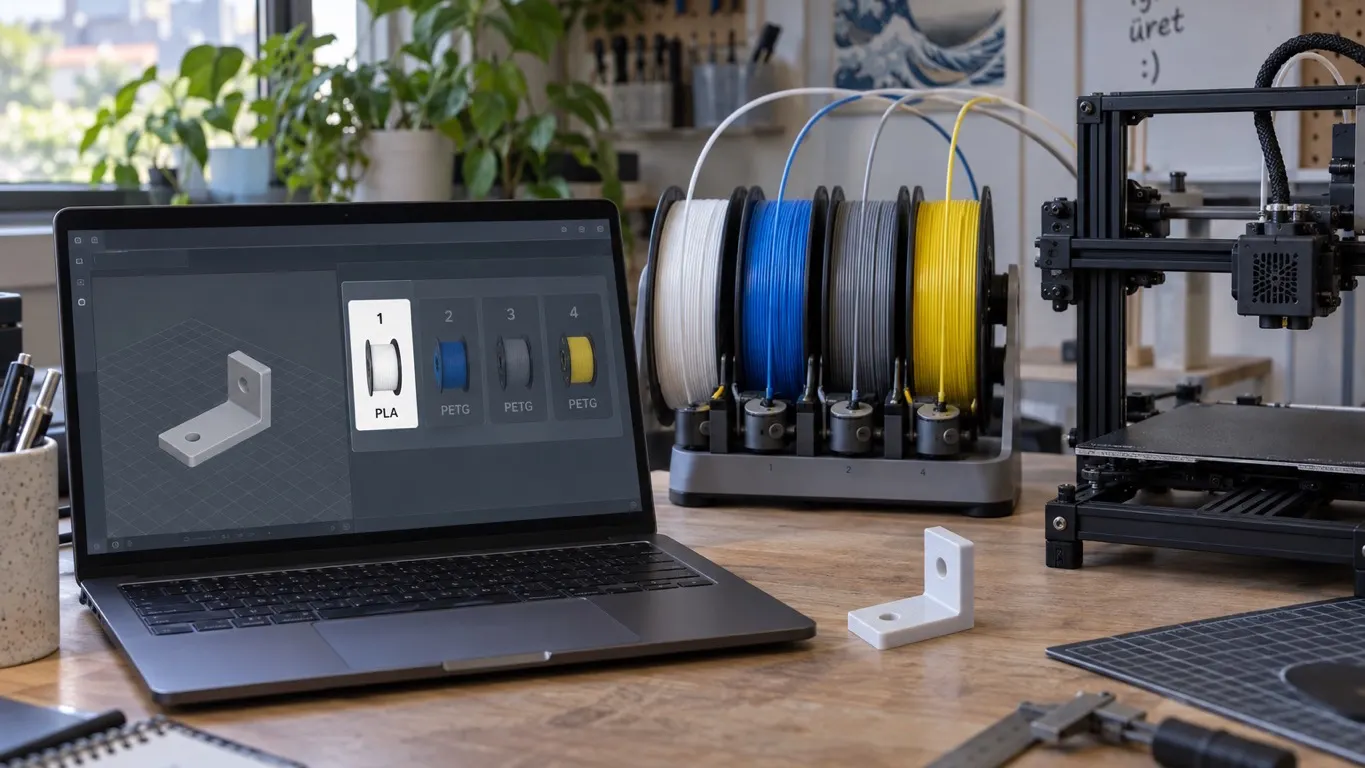
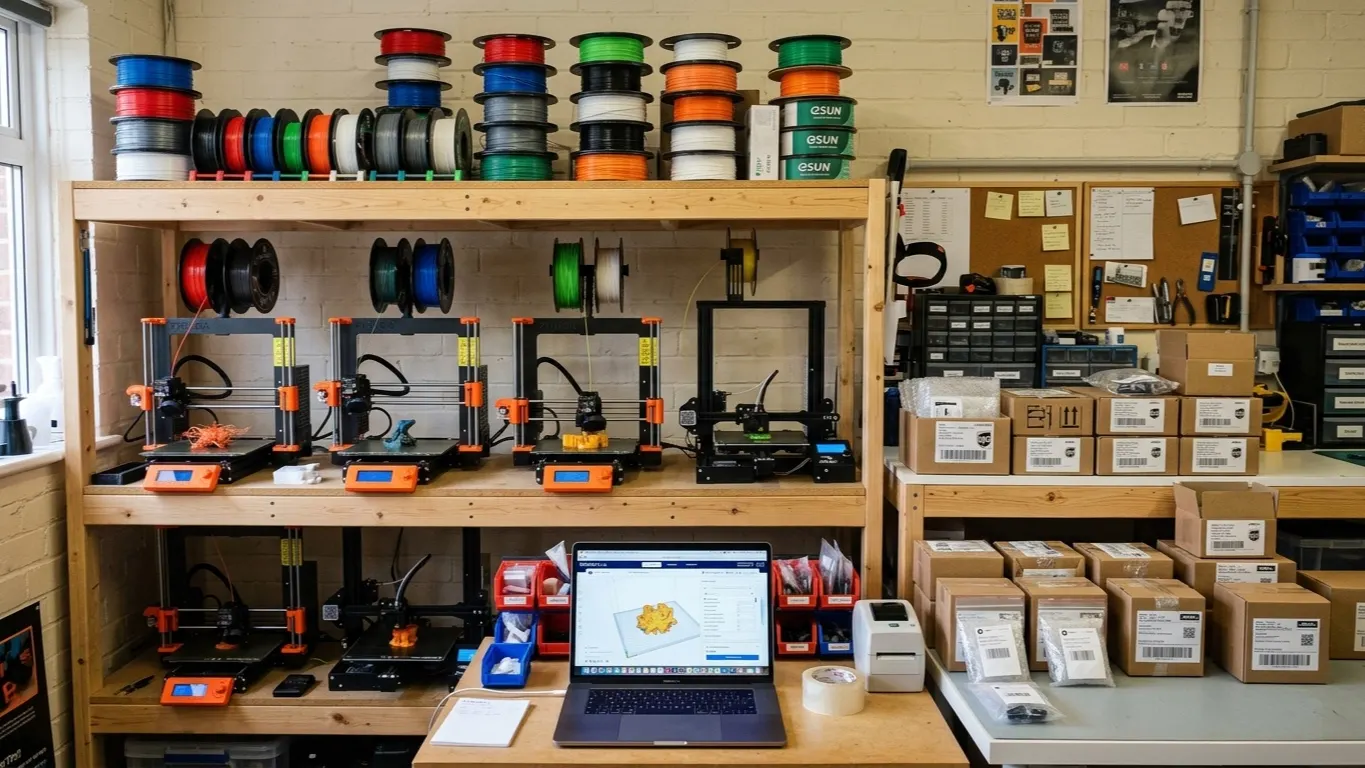
Making money with a 3D printer is possible, but there are three separate markets and the economics of each differ: selling finished products, print on demand, and selling designs. Which you choose decides how much capital you need, what your margin will be, and whether the work scales.
Below is a comparison of the three, a real margin calculation, and the jobs that lose money from the start.
Comparing the three markets
| Finished products | Print on demand | Selling designs | |
|---|---|---|---|
| What you sell | The part you print | A printing service | A file |
| Finding customers | Marketplace | Yourself | Platform |
| Margin | Low | Medium to good | Very high |
| Competition | Fierce | Local | Global |
| Scaling | With printer count | Limited by time | Unlimited |
| Skill needed | Printing | Printing plus sales | Design |
Selling finished products
Printing organizers, phone stands, toys and decorative pieces, then selling them on a marketplace. It is the easiest of the three to start and the one that pays least.
The problem is competition: hundreds of people print the same free model and the price has already fallen to cost. What wins here is either printing your own design or working at volume.
Working at volume means filling the bed and printing many parts at once. Four parts on one plate brings unit cost down noticeably, because depreciation and labor get split between them.
Print on demand
The customer sends a model and you print and deliver it. Margins are better because each job is one of a kind and hard to compare: the customer cannot line up ten sellers' prices side by side.
The trade-off is that finding customers is entirely on you. Local businesses, architecture and engineering offices, startups that need prototypes. This is a sales job, not a printing job.
You cannot quote a price without knowing your cost. In 3D printing cost I worked through the five items one by one; the figure the slicer shows is about a fifth of what the part really costs.
Selling designs
You draw the model and sell the file. No print cost, no shipping, no stock. Draw it once, sell it hundreds of times.
The catch is that you have to know how to design, and the competition is global. Most platforms hand out free models as well, so charging for one means genuinely standing out: niche work, unusual dimensions, or commercial licensing.
Platforms like MakerWorld pay per download. The amounts are small, but so is the cost of producing them.
The real margin: a worked example
A 24 g part, 5 hours of printing, sold at $8. The cost calculation is in the other article, but the result is $5.59.
| Sale | $8.00 |
| Cost (all five items) | $5.59 |
| Left | $2.41 |
Sell through a marketplace and commission comes off the top, typically 10-20%. At 15% that takes $1.20:
| Left | $2.41 |
| Commission (15%) | −$1.20 |
| Net | $1.21 |
That is $1.21 from a five-hour print. Note, though, that labor was already in the cost ($3.75), so you have already paid yourself for the time. The $1.21 is profit on top of that.
The number looks small, and it is. What makes this work is not a single part but a full plate.
Where scaling comes from
Fit four parts on the same plate and print time goes from 5 hours to 7, but:
- Depreciation splits four ways: 25 cents per part instead of $1.00
- Labor splits too: clearing four parts in one go beats clearing them one at a time
- Filament does not change; it is fixed per part
Unit cost falls sharply. Filling the plate changes the number more than printing fast does. Speed has a ceiling anyway, which I worked out in the flow article.
The second scaling step is a second printer. You prepare one while the other runs, which spreads labor across dead time.
Work that loses money from the start
Some jobs do not look like losses until you do the math.
Cheap parts that take a long time. A part that runs for 12 hours carries around $2.40 of depreciation on its own. The longer the print, the more depreciation eats into it.
Single-item small orders. Labor is fixed: slicing, cleaning, packing, shipping. The smaller the part, the bigger that fixed load looms in proportion. Shipping a $3 part is a loss.
Price races on marketplaces. If hundreds of people print the same free model, the price has already fallen to cost. After commission and shipping there is no margin left.
Multi-color printing. Changing color with an AMS burns real filament on the purge tower and stretches print time. It looks impressive, but it can double your cost. Changing color by hand is far cheaper for a few bands.
Working with wet material. Your failure rate loads onto the cost of every part. At 10% you add roughly 11% to each one; with moisture-hungry materials like nylon that rate can run much higher.
How much capital
The minimum set, for print on demand:
| Item | Roughly |
|---|---|
| Printer (desktop FDM) | A mid-range machine |
| A few spools | 3-4 colors of PLA plus one PETG |
| Basic hand tools | Craft knife, pliers, spatula |
| Filament dryer | Can come later, but it will come |
Selling finished products adds marketplace commission, packaging and shipping. Selling designs needs only CAD software, most of it free.
You read your return on capital off the depreciation line: divide the printer's price by its expected life (2,000-5,000 hours) and you get an hourly figure. That figure goes into the cost of every part, and that is how the printer pays for itself.
A realistic expectation
This works as a side income, not a way to get rich quickly. Margins are thin, the labor is real and the competition is fierce.
Those who win do one of three things: sell their own design (hard to copy), serve a niche need (little price pressure), or work at volume (low unit cost).
All three depend on knowing your cost. A price quoted without it either loses the customer or loses money.